Sunday, April 30, 2017

The Difficult Situation

This post was peer reviewed.
Click to learn more.

Image Credit: Flickr


     Author: Thomas Hull, MSIV
     Loyola University Chicago SSOM

I remember trying to take my first history and physical as a first-year medical student when a middle-aged man came into the emergency department (ED) with transient ischemic attack-like symptoms. With the encouragement of my preceptor, who was the attending emergency physician, I went to do a full interview history and physical. After spending almost 45 minutes learning about this man and his life in friendly conversation, I exited the room to see my preceptor with a somber face. The patient’s head computed tomography revealed numerous scattered round tumors at the gray-white junction, likely metastases from melanoma, which I’d just heard had been treated years ago and he considered “past” medical history. My preceptor apologized for such a first encounter, though confessed she was relieved to have a partner in delivering the news. I welcomed the role, willing to employ whatever emotional capital I’d just established, and confidently planted myself at his bedside as she began to tell him. But when he started crying, I knew that there was no good response – I stood there speechless.

Sunday, April 23, 2017

Pediatric Breath Holding Spells

This post was peer reviewed.
Click to learn more.


Author: Christine Au
Western University of Health Sciences, College of Osteopathic Medicine of the Pacific

In the world of emergency medicine, it is prudent to be trained and adept at handling the worse case scenario. Breath holding spells are a pediatric phenomenon that affects 5% of children from six months to four years where an involuntary pause in breathing occurs. This may lead to a patient becoming unconscious; however, these routine episodes are far from life-threatening.[1] Breath holding spells can be a result of various situations, such as a frightening or painful event, or can be linked to excessive anger in a child. Goldman defined this as a “benign paroxysmal non-epileptic disorder occurring in healthy children 6 to 48 months of age”.[2] There are two main types of spells: cyanotic and pallid. Cyanotic is much more common compared to the pallid type. These spells are a result of a decrease in heart rate, low oxygen, and high carbon dioxide in the system that may precipitate a loss of consciousness.

Thursday, April 20, 2017

Scapulothoracic Disassociation: A Rare and Devastating Injury

This post was peer reviewed.
Click to learn more.

Image Credit: Emergency Medicine: Open Access


The Case
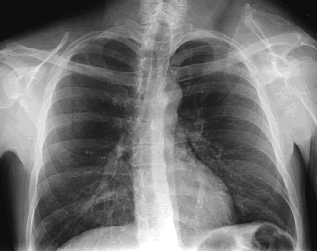
Trauma Activation: A 25-year-old motorcyclist traveling approximately 75 miles per hour lost control and the motorcycle slid from underneath him. His entire right side made primary contact with the road. Upon arrival, he was awake and able to participate in his examination. His left upper extremity was pulseless with a complete loss of motor function and sensation. 

Diagnosis
Left Scapulothoracic Dissociation - a traumatic disruption of the scapulothoracic articulation often associated with:
  • other orthopedic injuries including those to the acromioclavicular joint, clavicle, scapula, and sternoclavicular joint,
  • vascular injuries particular to the subclavian and axillary arteries,
  • neurologic injuries especially to the ipsilateral brachial plexus.[1,2] 

Sunday, April 16, 2017

An Electronic Resource Guide to the EM Clerkship

Image Credit: Pixabay
Author: Stephanie Cihlar
AAEM/RSA Medical Student Council President (2016-2017)

Smartphones and tablets have changed the way we practice medicine. They help us make informed medical decisions and offer a practical way to keep us up to date on the latest research. Apps and podcasts are increasingly popular tools used to help us achieve these goals, both inside and outside of the ED. For students striving to do well in EM clerkships, the ability to stay organized and access to the right resources is critical for success. However, in this rapidly changing world of medical apps, podcasts, and seemingly endless amounts of available information, it can be difficult to know where to begin. After evaluating some popular EM resources, I developed this guide of apps and podcasts to help students ensure success in their EM clerkships.

Thursday, April 13, 2017

Personal Learning Networks

Image Credit: Pixabay
Author: Mary Haas, MD (PGY-3)
University of Michigan

Over the past year I have come to appreciate the importance of concepts from sociology, psychology, and education theory on my development as a physician and educator. I recently had the pleasure of working with Drs. Felix Ankel, Anand Swaminathan, and Sally Santen on a lecture for the CORD Academic Assembly in Nashville, called Personal Learning Networks. This launched me on a study of personal learning networks and their impact on my own development so far.

A personal learning network refers to a dynamic group of connections that allow individuals to both teach and learn, share ideas and collaborate. Each individual or organization within a network is referred to as a “node.” These networks reflect our values, goals and interests. They include a mixed level of expertise: peers, novices, and experts can all serve as nodes. The most effective personal learning networks include connections outside one’s immediate institution and area of expertise, called “weak ties.”